
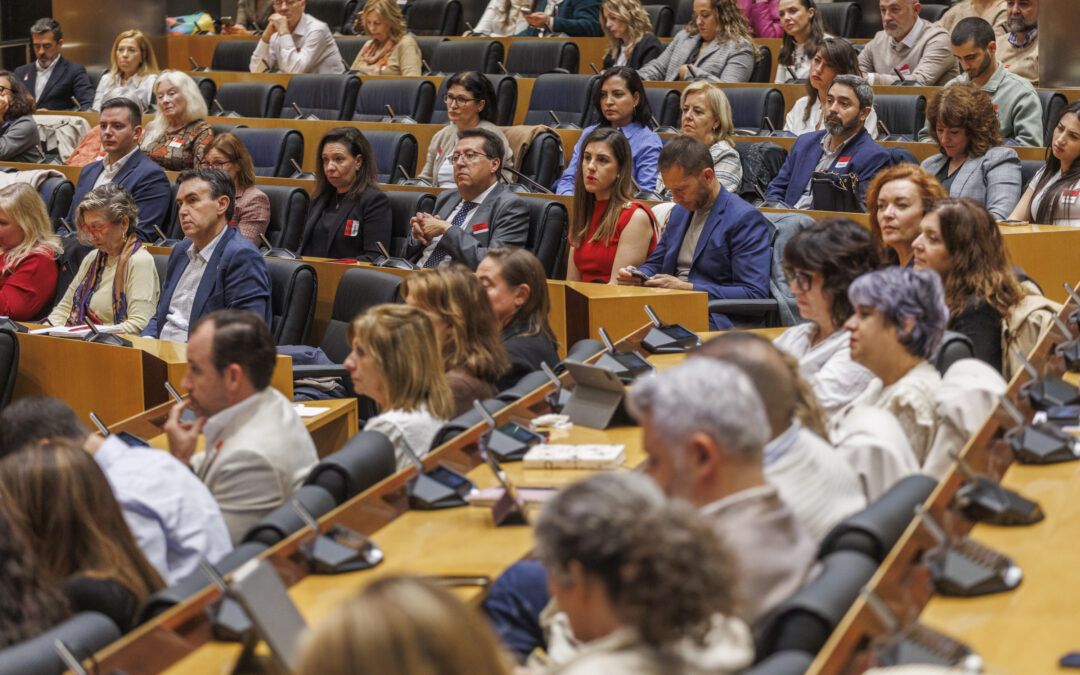
The President of the Lower House, the Minister of Equality, and the Chair of the Equality Committee of Congress took part in the event organized by the Public Affairs consultancy
Congress of Deputies, Monday, October 21, 2024. ‘Parity Goal: Women in Positions of Power’. Under this title, the Public Affairs, Business, and Political Advocacy consultancy organized an event this Monday, October 21, at the Congress of Deputies to highlight the importance of parity in leadership positions following the approval of the law regulating it.
The President of Congress, Francina Armengol, who inaugurated the event, stated that “the conclusions drawn will help make better decisions.” She also called for “breaking the numbers” in order to “reach a new kind of power—one that is plural, diverse, fair, and empathetic.”
Meanwhile, the Chair of the Equality Committee in the Lower House, Susana Ros, emphasized that “parity improves decision-making and increases productivity and profits.” She also underlined the importance of the parity law, the subject of the event organized by Estrategos, noting that “without it, we wouldn’t be seeing so many women in leadership roles.”
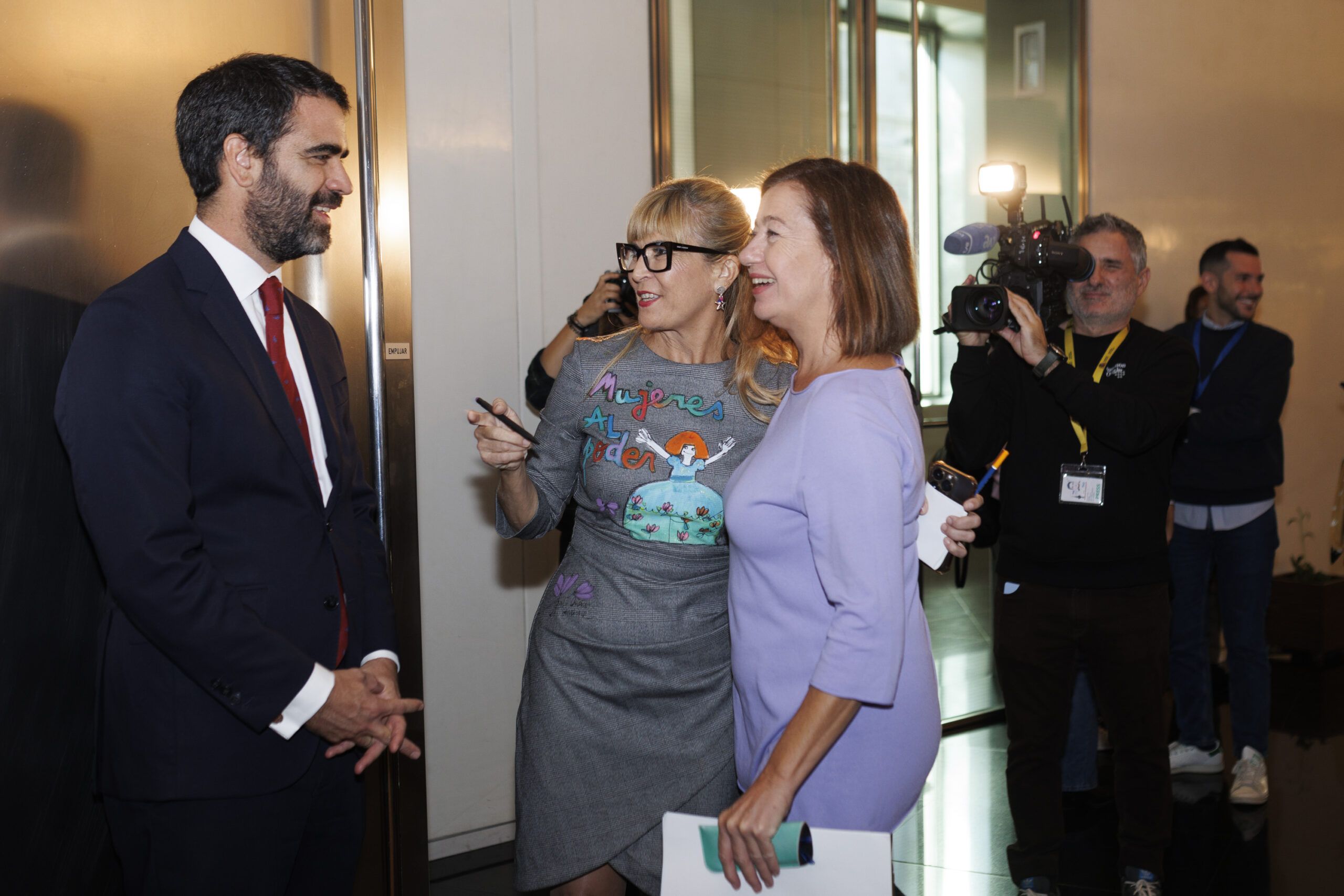
The Minister of Equality, Ana Redondo, closed the event with a video message in which she stated that “the Parity Law is transformative because it will bring about a change in society,” and emphasized the importance of women “occupying every space that is rightfully theirs.” “The goal is to take the Parity Law everywhere,” the minister concluded.
The first roundtable, titled “Equal Company, More Productive Company: The Benefits of Committing to Equality”, brought together representatives from Telefónica, ACS, Taisi, Roche, and Mondragon.
Ruth Soto, Labor Relations Manager at Telefónica, thanked Estrategos for the opportunity to present the company’s equality policies in Congress, calling it “a milestone worth recognizing,” and made reference to the famous “Cable Girls.”
From ACS, Cristina Aldámiz-Echevarría, Director of Subsidiaries, Operations and Sustainability, called for “creating the right environment so that women can step forward without feeling they have to choose.”
Taisi’s Director, Ruth Lázaro, also expressed gratitude to Estrategos for including her in the debate, noting that “the value of SMEs is often not heard,” and stated that while her company’s goal is to be “economically sustainable,” what matters even more is its “social and environmental dimension.”
Mariano Torres, Head of People and Culture at Roche, explained that the company has created “a volunteer group that devotes part of its workday to encouraging women’s interest in technical and scientific careers,” helping them join the company and rise to leadership roles.
From Mondragon, Vice President Nerea Aranguren emphasized the importance of diversity in governing bodies, saying, “it is the only way to effectively face a complex environment.”
This roundtable was moderated by La Vanguardia journalist Fernando H. Valls.
“Business Organizations, Cooperatives, and the Third Sector Facing the Challenge of Parity” was the title of the second roundtable, structured as a series of mini-conferences and moderated by Infolibre journalist Antonio Ruiz Valdivia.
Ana Bosch, Legal Director and Head of Human Resources at Farmaindustria, used the pharmaceutical industry as an example, expressing hope that it could “serve as a mirror for other sectors,” given its commitment to equality and parity, with “more than 45 percent of board positions” held by women.
Save the Children Spain President, Pilar Kaltzada, stated that the organization has a “clear transversal gender approach,” emphasizing that “the most vulnerable are always girls.”
From the Federation of Associations of Rural Women (Fademur), President Teresa López used the event organized by Estrategos to call for electoral lists in municipalities with fewer than 3,000 inhabitants to also be subject to parity requirements, stressing that depopulation is at stake and affirming that without women, “there is no future in rural areas.”
Finally, Women’s Institute Director Cristina Hernández stated that “working for equality is about upholding human rights,” and made it clear that “equality didn’t fall from the sky.”

To conclude the debate, the third roundtable was titled “Advantages, Challenges, and Obstacles in Implementing Equality Policies”, featuring participants from Carrefour, Seidor, EDP, the Spanish Olympic Sports Association (ADO), and Seat.
Juan Antonio Sánchez, Legal Director at Carrefour, emphasized that the retail company is focused on “promoting women” because they have “enormous potential to develop their talent” within the company. He also noted that parity rules are “clear” and now the task is to “implement” the law.
From Seidor, Iván González, Director of Marketing, Communication, and Sustainability, remarked that “having an equality plan isn’t just about regulations” and stressed that “new generations demand a commitment to diversity, equality, and their identity as young people.”
Yolanda Fernández, Director of Institutional Relations at EDP, said that the energy company reviews its equality plan every year to “assess what works and what doesn’t, and make the necessary changes.”
Jennifer Pareja, Director General of the Spanish Olympic Sports Association (ADO), pointed out that “only three of the 65 Spanish sports federations are led by women,” and expressed her support for quotas, stating that “equality policies not only open doors but transform lives.”
Patricia Such, Director of Public Affairs at Seat, regretted that the automotive sector is still “male-dominated” and “not appealing to many women,” but added that the company has “an entire department dedicated to diversity and the inclusion of women.”
The roundtable was moderated by Lídia Guinart, Chair of the Monitoring and Evaluation Committee of the State Pact on Gender-Based Violence.
Estrategos also wanted to include, for the final stretch of this parity-focused event, renowned sports journalist Paloma del Río, best known for her coverage of rhythmic gymnastics and figure skating at numerous Olympic Games.
Del Río highlighted that “men have been practicing sports since ancient Greece,” while women only began doing so “at the end of the 19th century.” She also pointed out that “archives are full of women’s achievements credited to men, especially in science.”
“We’re pushing a tractor uphill, and if we stop pushing, it not only stops but rolls backward,” she said, referring to the ongoing effort required to achieve equality between women and men.
The three roundtables, along with the opening and closing sessions, were held in the Ernest Lluch Room of Congress, which remained full of attendees throughout the day. The event was hosted by journalist and parliamentary correspondent for La Sexta, María Llapart.